Because I can easily overlook the beauty of ordinary moments, I’ve tried going out of my way to notice them more.
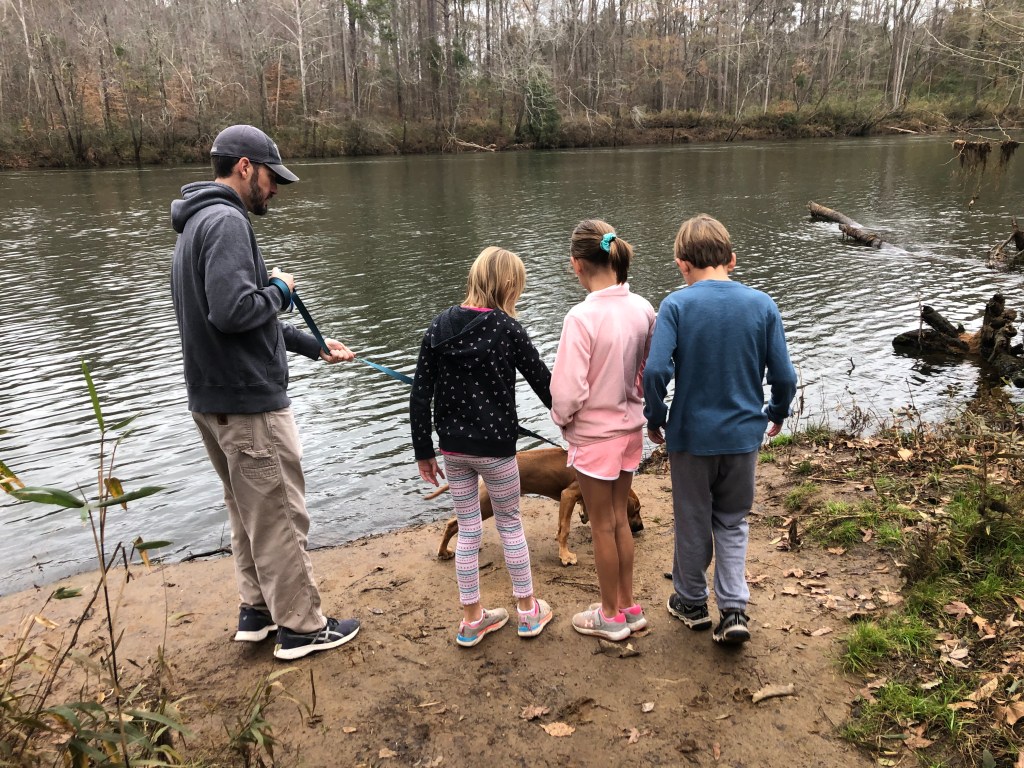
My kids have been going to school four days a week with Friday being a virtual day. I captured this sweet moment the other day. I easily could have missed it, but I’m trying to notice them more.
I think it’s a discipline to practice: noticing ordinary moments – taking mental snapshots, and giving thanks to the Lord for them. Psalm 69 says, I will glorify Him with thanksgiving.
We glorify the Lord when we give thanks.
In Luke 17, Jesus healed ten men of leprosy. He was pleased by the one man who came back to praise and thank him. But, Jesus asked, “Were not all ten cleansed? Where are the other nine? Then he said to him, “Rise and go; your faith has made you well.”
In a culture that wants more, more, more, I think we can easily underestimate the beauty and bliss of simple, ordinary, moments.
What are the sweet, ordinary moments all around you that are easy to miss?
What can you see and notice that you didn’t before?
What moments can you thank Jesus for that are right in front of you?
Lord, when we want to escape the mundane, the ordinary, and have a woe is me attitude, help us to have eyes to see the beauty in the ordinary. Help us to not need more, but to find joy in You, what is, and to give thanks for it. In Jesus’ name, amen.
___________________
___________________
Sometimes the people who are helping us through hard times get overlooked – all the sacrifices they make to help us get through that tough time so we are able to do what we need to do.
This past few months while my dad has been going through everything, my husband has been so incredibly supportive and my kids have been so helpful and understanding. Always encouraging, hoping, and praying with me.
On my many trips to Atlanta, my husband has watched the kids, taken off work, worked from home when he can, made meals, kept up with the day-to-day things.
It’s easy to overlook what the people around us do during times like these, but I want to recognize each of you now. Thank you to each of you who make sacrifices every day to love the people closest to you well. You’re not overlooked. We see you. The Lord sees you. And we are so grateful for you. ️
“My command is this: Love each other as I have loved you.” Jesus
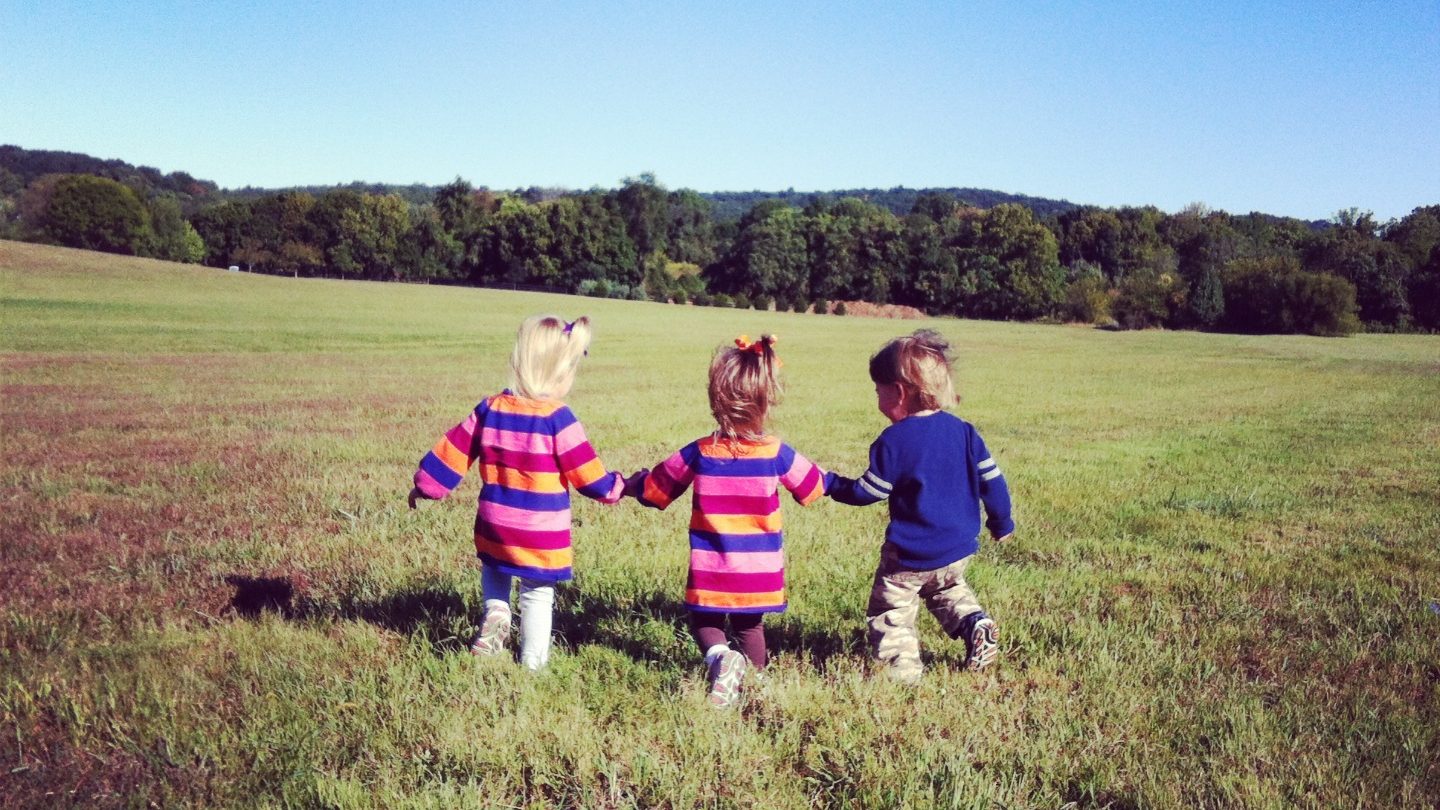
When my triplets were in the toddler stage, whew, you can imagine. I learned a whole lot through experience, successes and mess-ups, and books like “Raising Great Kids” and “Boundaries with Kids”. I hope these nuggets I’ve shared offer some insight and encouragement as you parent your precious little ones who are at such a pivotal stage of learning and growing.
“The Terrible Twos” When my triplets were two, it was a sweet stage but also very challenging and tiring because of having to enforce boundaries and follow-through again and again. By the time they were three it got a lot better. Yes, our kids still challenged us some, but not nearly as much as when they were two because they knew expectations and consequences. I know for some, three-years old is more challenging than two-years old. Regardless, our aim should be for our kids to learn how to follow expectations in these toddler years.
One of the jobs for kids is to see how much they can get away with – to push boundaries – all kids do that and it is very normal. But how it’s handled at this stage will affect a child’s behavior later on.
How Kids Learn in the Toddler Stage Kids in this stage don’t learn simply from reasoning with them and us getting upset if they do something wrong. If we get mad at them, they might learn in the short-term because they’re afraid, but not in the long-term. We want them to gain wisdom in decision making for the long run. And it’s our responsibility to teach them.
Explaining things can be helpful, but at this age, kids learn mostly from consequences. A parent can try to reason all day long with a two- or three-year old, or have a fussy and disappointed voice at their behavior and share why they shouldn’t do a particular thing, but what registers most is a simple consequence- THIS PART IS IMPORTANT- NOT a warning of a consequence, but just giving a consequence. Yes, we all give warnings sometimes when we’re just too tired and when we think our kids just need grace and to be redirected. But, it is really important at that age to be consistent with what happens if your child disobeys.
Disrespect is a really good umbrella rule. When your child knows he needs to show respect, then you can give consequences when he doesn’t show respect. Many behaviors fall under this one rule: how they treat others, how they speak to you, listening to you, and many others.
First, Explain to your Child What Behavior is Expected Have a simple conversation with your child to share expectations like this: “You need to show us respect by doing what we ask you to do right away. That shows respect. If you don’t listen to us then you will get a consequence.”
This will help you avoid having to ask your child time and time again to do something. For example, If your child is hitting something you don’t want her to, and you tell her to stop, but she keeps doing it and gets no consequence and just a warning, she learns that she doesn’t have to listen the first time and will see how many times she can get away with that behavior before getting a consequence.
That’s just the way kids are wired. It’s our responsibility to teach them that there are consequences for their actions so we can help them mature and grow into responsible kids and then responsible adults.
Then, get ready, your child will test you. The next time he doesn’t do what you ask him to do the first time, give him a timeout. Don’t ask him, “Do you want a timeout?”That might stop him in the moment, but it just perpetuates the problem and he learns he doesn’t need to listen right away. It will be easier for you in the moment, but so much harder in the long run.
Practical Steps with a Timeout When you ask your child to stop doing something and she doesn’t, she is not being respectful which is breaking the “Be Respectful rule” so she gets a timeout. A good rule of thumb is to give your child one minute for each year of her age. So, if your child is two, she would get two minutes.
If your child is not staying in timeout, he can learn to. Again, you just need to be consistent – when he gets out, put him back in timeout and let him know you’re starting the timer over every time he leaves timeout. You might have to keep bringing him back to timeout over and over, but if you stick with it, he will eventually learn he has to stay there.
It also helps to have the same spot (without toys) for timeout to create consistency. If you’re at a friend’s house, find a space away from other kids where he can have a timeout.
He might scream and cry in the timeouts and throw a fit, but that’s okay. He’s fine. He’s just sitting in a space for a few minutes. It hurts our kids more in the long run if they don’t have consequences. Eventually, he’ll learn that acting out doesn’t give him a pass for missing time out.
If you tell him he has a time out, but then change your mind because he’s fussing, the next time, he’ll scream that much longer. If you follow through and he still gets a timeout even after having a fit, he will eventually learn he has to stay there and the fits will lessen. He’ll also learn that a particular behavior is not acceptable, and you should see that behavior improve.
Depending on how lenient you’ve been when your child disobeys, she might test you a million times to see if you will actually follow through. Most kids will. For several weeks it will probably be really hard, but it will pay off ten-fold after that. It’s hard work, but it will be worth it.
What to Say After the Timeout is Over After the timeout, explain sternly and calmly, “You were in timeout because I asked you to stop and you didn’t. Next time when I say stop, you need to stop. I love you.”
Keep it simple. And, you don’t need to show disappointment and anger – I know we’re human, but if we can remain calm, but stern, showing that we’re the parents and are in charge, they’ll know that they’re not rattling us, and it will actually make them feel more secure. Even though they don’t show it or know it, kids long for boundaries and consistency because it provides security and gives them more confidence.
The Law of Sowing & Reaping If your child doesn’t have consistent consequences and doesn’t listen now, when she gets older it will be a lot more difficult. If you teach her to respect you now, it will come far more naturally when she’s older. It doesn’t mean your kids won’t challenge you – they will – but it will be less, and they’ll know a consequence will follow so they’ll think twice before doing it.
Grasping this concept will help our kids understand The Law of Sowing and Reaping: simply that you reap what you sow.
When Your Child DOES Show Respect When your child does show respect and listen the first time you ask him to do something, point it out and CELEBRATE that big time. That is a great way for your child to learn what it looks like to be respectful. For example, you could say, “I love the way you asked so nicely for dinner,” or “That is so kind how you shared with your friend.” Those statements are incentive for your child to repeat the good behavior.
You can read my post about encouraging your child to listen the first time with positive reinforcement like a marble jar on my blog, LinseyDriskill.com – just type in “the first time” in the search box.
When to Use Correction & Redirection Instead of Consequences There are times your child will just need correction and redirection – after all, they are learning. If he doesn’t know a particular behavior and what’s expected, it’s not fair to give a consequence. Make sure he first understands what is expected.
Redirection can also be helpful when your child says something in a disrespectful way. If your child is two or three, he’s probably not aware he’s speaking rudely. Or, if he hasn’t been corrected when he speaks that way, it’s probably just a habit now. Your child needs to learn the right way to speak to you and others consistently to break that habit. Don’t accept anything less and it will improve.
If you expect your child to speak respectfully now and stay consistent with it, he will be more likely to speak respectfully when he’s older. I know the redirecting can be tiring, but again, it will pay off so much later and will only help him in home, school, life because you’re training him in what’s acceptable.
A Behavior That Needs Redirection For example, if your child wants something and says, “Give it to me now,” I wouldn’t give him a timeout because you don’t want to go timeout crazy – that would exhaust him and at that age, sometimes they just need to be redirected with some things they’re still learning. I’d just calmly say, “How do you ask for that nicely?” Then, don’t give him what it is he wants until he asks nicely. He’ll learn. Quickly. The Law of Sowing and Reaping is in effect here because the natural consequence is not being able to have the item he wants until he asks nicely. You’re giving him a chance to learn and correct himself. Natural consequences are very effective.
A Behavior That Needs a Consequence On the other hand, if he plays roughly with banging something and you have already asked him to stop but he keeps doing it, he knows that’s wrong. Take the item away and then tell him, “You didn’t listen when I asked you to stop so you will lose the toy during timeout. When I ask you to stop, you need to stop. That’s respectful. I love you.”
Respect is one of the most important things our children need to learn as they grow up.
Then after the timeout, give him the toy again to see if he handles it well and doesn’t bang it. If he bangs it again, DO NOT warn him that you’ll take it away if he does it again. You already told him that. Just take the toy away for the whole day and give him another timeout for disrespecting you by not listening. Let him know he has a timeout for not listening when you asked him to not bang the toy.
After the timeout, let him know he lost the toy for the whole day for not listening, but that he can try and play with it again tomorrow. Tell him again that he needs to respect you by listening to what you ask him to do and doing it right away. Then, tell him you love him, and move on. Try your best to catch him soon listening the first time so you can give him some encouragement.
When Our Kids Are Just Tired Sometimes our kids are just plain tired and need a rest and that’s why they’re misbehaving. When my kids were this age, if they seemed worn out, I tried to recognize that and would just read them a book to calm them or let them nap.
Parenting with Grace & Truth Parenting can be really hard because it’s not an exact formula. But, if we can try our best to parent our kids with both grace and truth, that will help them, not only now, but later on as well. We want our kids to learn the Law of Sowing and Reaping when they’re in our homes so they don’t have to learn it the first time from others.
I’m learning more about parenting every single day and I still have much to learn. But, I hope this post has offered you some practical tips and ideas. If so, that would be great if you’d share it with others.
Lastly, remember that every single child at this stage challenges in some way – it’s normal. It’s how we respond and what we do about it that affects our children’s behavior going forward.
There’s a reason Jesus gave us these words: “Do not let your hearts be troubled. Trust in God and trust also in me.” John 14:1
He knew we would face difficulty.
There’s a reason the Lord told us “Set your hearts on things above, where Christ is, seated at the right hand of God. Set your minds on things above, not on earthly things.” Colossians 3
He knew the world would be chaotic at times.
There’s a reason God told us that He holds all things in His hands: “In his hand are the depths of the earth, and the mountain peaks belong to him…I have engraved you on the palms of my hands.” Isaiah 49, Psalm 95
He knew that sometimes the world would feel like it’s spinning out of control.
There’s a reason Jesus gave us the command to “love one another.” John 13
He knew there would be times our anger and hurt would try to lead the way.
There’s a reason Jesus told us, “if you forgive other people when they sin against you, your heavenly Father will also forgive you.” Matthew 6
He knew that each of us would fall short and need grace from one another.
There’s a reason Jesus told us that “all things are possible with God.” Mark 10
He knew that sometimes things would seem impossible.
There’s a reason Jesus said, “I am the way and the truth and the life.” John 14
He knew that we would feel lost and need Him.
There’s a reason Jesus said, “I am the light of the world. Whoever follows me will never walk in darkness, but will have the light of life.” John 8
He knew there would be darkness here, but that even then, we can have hope & walk in the light because He IS the light of the world.
With Jesus, indeed, all will be well because this isn’t it. With the Lord, is life forever. What hope there is in Jesus. “Very truly I tell you, the one who believes has eternal life.” – Jesus (John 6)
May we fix our eyes on Jesus, today and always, being the lights he has called us to be and trusting him to be the light to guide us.
Happy NEW Year! Receive my Free “How to Do Allowance” Tips by subscribing to my blog (you’ll receive Faith & Parenting content once a week & can unsubscribe any time). If you are already subscribed and would like these tips, comment below & I’ll send it to you.










 Linsey Driskill